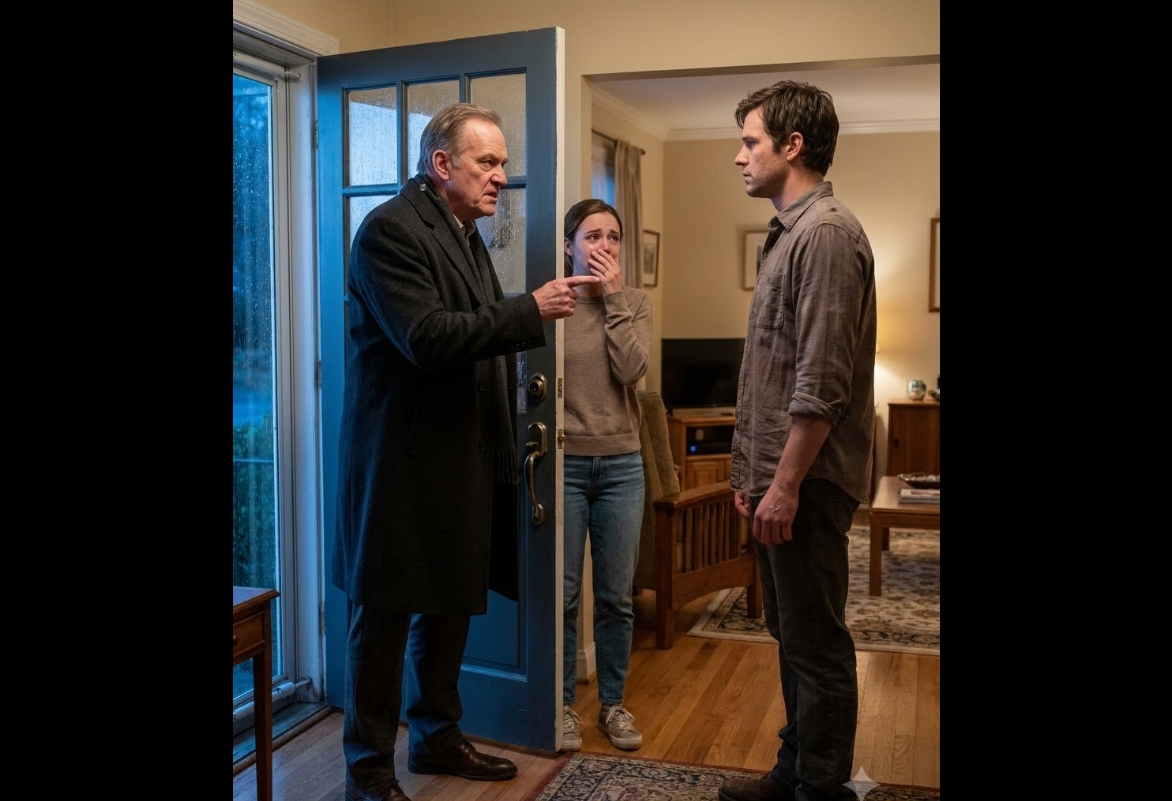
After a year of mourning, a mother makes a fragile attempt to draw her daughter back into the world. But a heartbreaking afternoon before prom reveals that her daughter’s silence has been burdening her with more than just loss.
The house had learned to hold its breath after Mason’s death. A year of silence had settled in the walls, in the unwashed coffee cups, in the closed door at the end of the hall where my daughter now lived like a ghost in her own bedroom.
Almost every morning I would stand by that door, with my palm resting on the wood, listening to the sound of his breathing.
Hazel was seventeen. She was dancing in the kitchen while I made pancakes.
After the funeral, Hazel stopped eating.
Mason used to call her Hazelnut and steal her syrup. He used to promise her, loud enough for the whole table to hear, that if no boy was smart enough to ask her to the dance, he would put on a tuxedo and take her himself.
He never had the chance. A truck on Route 9, a wet road, a Tuesday.
After the funeral, Hazel stopped eating. Then she ate too much. Then she stopped going out.
Eli was the only person he let near him. The quiet boy from two houses down, his best friend since sixth grade, would come by after school with his homework folded under his arm.
He never called too loudly. He never asked her questions.
He shrugged it off as if nothing had happened. To him, I think it had.
Some afternoons I would find them on the porch, not speaking to each other, with Hazel’s head leaning sideways against the railing while Eli sketched something in a notebook.
“Mrs. Mave,” she said one afternoon, looking at me. She’d called me that since she was twelve, when she decided that calling me just by my first name seemed too informal and anything more formal seemed too exaggerated. “She ate half a sandwich today.”
“Thank you, Eli.”
“Because?”.
“For sitting with her.”
I once found his diaries.
He shrugged as if it were nothing. To him, I think it was.
I once found her diaries, the old ones from her first year, hidden behind a row of paperbacks. Girls’ names. Boys’ names. Cruel little phrases written in her round handwriting, the kind of words you only write because you can’t say them out loud.
I put the diary back exactly where I found it.
That spring, invitations to the dance started arriving in other girls’ mailboxes. I saw the photos their mothers posted online, daughters in pastel dresses and holding bouquets.
I knocked on Hazel’s door.
“Mason wanted you to go.”
“Honey. The dance is in three weeks.”
“I’m not going, Mom.”
“Mason wanted you to go.”
She was silent for a long time. Then I heard the bed creak and footsteps, and the door opened a crack.
“Mason wanted many things.”
“He wanted you to put on a dress and dance and laugh,” I said. “He told me so.”
“Mother”.
I should have known.
“Just try one on. One dress. If you hate it, we’ll go home and never speak of it again. Okay?”
She looked at me through that crack in the open door, and I saw something flicker behind her eyes that I hadn’t seen in months. It wasn’t hope, exactly. Curiosity, perhaps. A small permission.
“A dress,” she said.
I drove to the mall the following Saturday, my hands gripping the steering wheel, a knot of something dangerous in my chest. Hope. After a year of nothing, I dared to feel hope again.
I should have known.
Upon reaching the fourth tent, I could see Hazel withdrawing into herself.
The first three boutiques used gentler language. “Limited inventory.” “Sample sizes only.” “We could do special orders, but not on time.” Even so, it was clear they thought it was too big for their dresses.
In the fourth tent, I saw Hazel curling up into herself, her shoulders raised to her ears, just like at Mason’s funeral.
I tried to keep my voice bright.
“There’s one more place. Maple’s beautiful spot.”
“Mother”.
“Just one more, darling.”
The saleswoman looked at her slowly, her mouth pressed tightly together at the corners.
I almost let slip the old nickname, but I caught it before it could hurt her. That word belonged to Mason. Only to Mason.
Maple’s shop had a dress in the window that I’d already pictured her wearing. Ivory, soft, romantic. Hazel stood in front of the glass for a long moment and then, in a voice I hadn’t heard in a year, asked, “Could I try on the one in the window?”
The saleswoman looked at her slowly, her mouth pressed tightly together at the corners.
“That won’t do you any good, darling. You’re too big.”
That was it. He didn’t soften. No apology.
Hazel didn’t cry. She didn’t argue. She turned around, walked through the door, and got into the passenger seat of my car. I followed her, my hands trembling on the keys.
He stared straight ahead the entire way home.
“Hazel, I’m so sorry. I’m going to go back inside and…”
“Please drive.”
“Dear…”
“Please. Drive.”
She stared straight ahead all the way home. I kept watching her, waiting for the breakdown, the tears, anything. Nothing came. That scared me more than I would have been scared of her sobbing.
He went inside, went upstairs, and closed his bedroom door. I heard the lock click.
I rested my forehead against the door and cried as quietly as I could.
I followed her upstairs. I sat on the rug outside her room, my back against the wood.
“Hazel. Open the door. Please.”
“I’m not going to the dance, Mom.”
“Honey, we can find something. We can sew something ourselves, we can…”
“Mom, stop.” Her voice was flat, exhausted. “I’m not going. Please, stop trying.”
I pressed my forehead against the door and wept as quietly as I could. I had buried one son. I felt the second slipping away through the gap under the door, and I had no idea how to bear it.
I opened the door wearing yesterday’s clothes.
I don’t know how long I sat there. Long enough for my legs to go numb. Long enough for the light in the hallway to change.
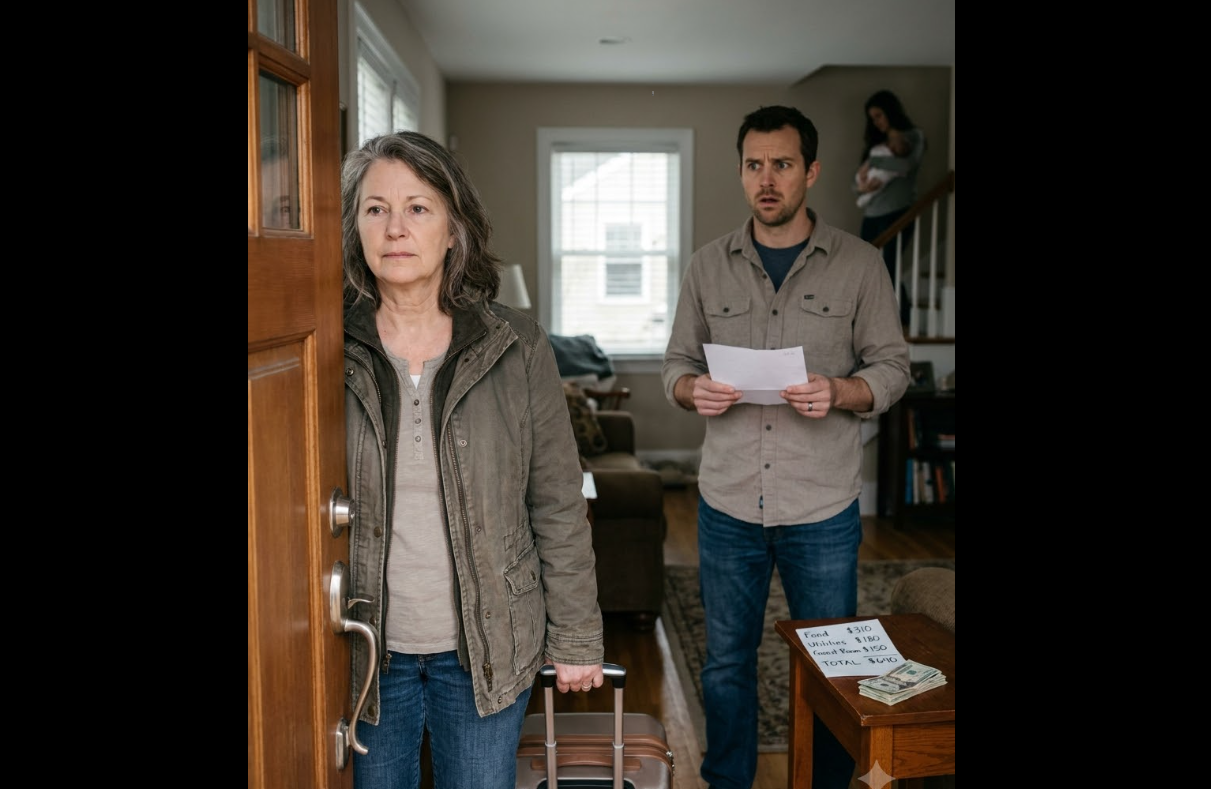
A few days later, there was a knock at the door.
I opened the door wearing yesterday’s clothes. Eli was on the porch in a faded sweatshirt, holding a small notebook to his chest. He seemed nervous. He also seemed determined, which was new for him.
“Mrs. Mave. May I speak with you out here?”
I went out onto the porch and closed the door behind me.
“Is Hazel okay? Did she send you a message?”
I stared at that boy I had watched grow up two houses down.
“No, ma’am.” She took a breath. “I need your measurements.”
“Eli, what…?”
“The dance is in two weeks. I can do it. I know how that sounds. But I need you to trust me. And I need you not to say anything to her. Not a word.”
I stared at that boy I’d watched grow up two houses down. Seventeen years old. Bitten nails. Holding a notebook like it was a contract.
“Eli, you’ve never made a dress like this in your life.”
That night, I looked out the kitchen window and saw the light from Eli’s bedroom well after three in the morning.
“No, ma’am. I haven’t done it.”
“So, how…?”
“I just need her to say yes.”
I was about to say no. He was absolutely right. But there was something in his eyes that didn’t belong to a seventeen-year-old boy. Something stronger than anything I’d felt in a year.
“Yes,” I whispered.
That night, standing by the kitchen window, I gazed at the light from Eli’s room well after three in the morning and wondered what the hell I had just agreed to.
His mother called me on the third day.
The light from Eli’s bedroom window became my new clock.
Past midnight, past two, past three. Some nights I would stand by the kitchen sink and watch it burn while the rest of the street slept.
His mother called me on the third day.
“Mave, her fingers hurt,” she told me. “I wrapped them in cold bandages and she took them off. She skipped a chemistry exam.”
“Should I stop him?”
“I don’t think anything can do it,” she said softly. “He’s been on that machine ever since he could reach the pedal. You know that.”
Two weeks seemed impossible.
Yes, I knew. I’d seen her hemming my curtains while six-year-old Eli fed her pins from a magnetic plate and asked why the thread had a number on it. At ten, she drew dresses in the margins of her spelling homework. At thirteen, she altered her own jackets on her old Singer sewing machine.
I hung up and pressed my forehead against the cold window.
Two weeks seemed impossible. Two weeks felt like the countdown to another disappointment I would have to endure for my daughter.
Meanwhile, Hazel was sinking.
She stopped coming down for breakfast. She wore the same gray hoodie for three days straight. When she knocked on the door, she answered with syllables.
On the fourth day, I went into his room to change his clothes and found a notebook under the bed.
I tried to keep her tied down with little lies.
“I’m just running errands,” she said, when in reality she was buying ivory silk thread at the craft store because Eli had sent her a list by SMS.
On the fourth day, I went into his room to change his clothes and found a notebook under the bed. Not the first-year one I’d been flipping through months before, behind the paperbacks. It was newer. From his second year, clutched in his hand, tighter and angrier.
Names. Pages full of them.
Girls who whispered as she walked by. Boys who posted things the week after Mason’s funeral. Comments she’d captured and printed and tucked between the pages like pressed flowers turning black.
I picked up the phone and photographed the pages one by one.
I sat on her rug and read every page.
That was the antagonist. Not a saleswoman. Not a shop window.
It was a choir that my daughter had been carrying inside her ribs for two years.
I picked up my phone and photographed the pages one by one. Then I sent them to Eli. I don’t know if any of this will help you, I wrote. I just thought you should see what I was carrying.
The three dots appeared and disappeared for a long time. I sat on her rug and watched them, wondering what I could do with a list of cruelties less than two weeks before a dance. Burn them, maybe. Read them and grieve. I hadn’t sent them with a plan. I’d sent them because I couldn’t hold them alone.
On the morning of the sixth day, I made the mistake of calling the shoe store from the kitchen.
When her reply finally arrived, it was just one line. I already knew some of it. The rest, thank you.
Then, a minute later: I know what to do with them.
I stared at the second message until the screen went black. Of course I knew. I’d been his best friend through it all. I’d seen the corridors I’d only heard whispers about. I’d already been building the toga’s bones. Now I’d found his heart.
On the morning of the sixth day, I made the mistake of calling the shoe store from the kitchen.
“Size eight, ivory, low heel,” I said into the phone. “For dancing, yes.”
I turned around and Hazel was at the door.
“You keep trying to make me go back to being who I was.”
“What are you doing?”.
“Hazel…”
“I told you to stop.” Her voice broke. “I told you. Why won’t you listen to me?”
“Dear…”.
“You keep trying to make her go back to being who she was. She’s gone now, Mom. She died when Mason died. Why can’t you accept that?”
“Because I love who you are now, too,” I said, my voice trembling. “I want you in this kitchen. I want you in that sweatshirt. I just want you to have one night.”
He slammed the door so hard that the picture frames flew off.
“For whom?” she shouted. “For you? For him?”
He slammed the door so hard that the picture frames flew off.
I stood there with the phone still in my hand.
I was about to call Eli right then. I was about to walk across the lawn and tell her to put the needle down, that I’d made a mistake, that I was sorry for her fingers.
Instead, I walked.
His mother let me in without saying a word and pointed to the stairs.
It wasn’t my responsibility to open it.
I pushed open her door.
He was asleep next to the sewing machine, his cheek resting on the table, one hand still wrapped around a spool of thread. My photographs were printed and scattered on the floor beside him, their names written in pencil. The dress was draped over a mannequin behind him.
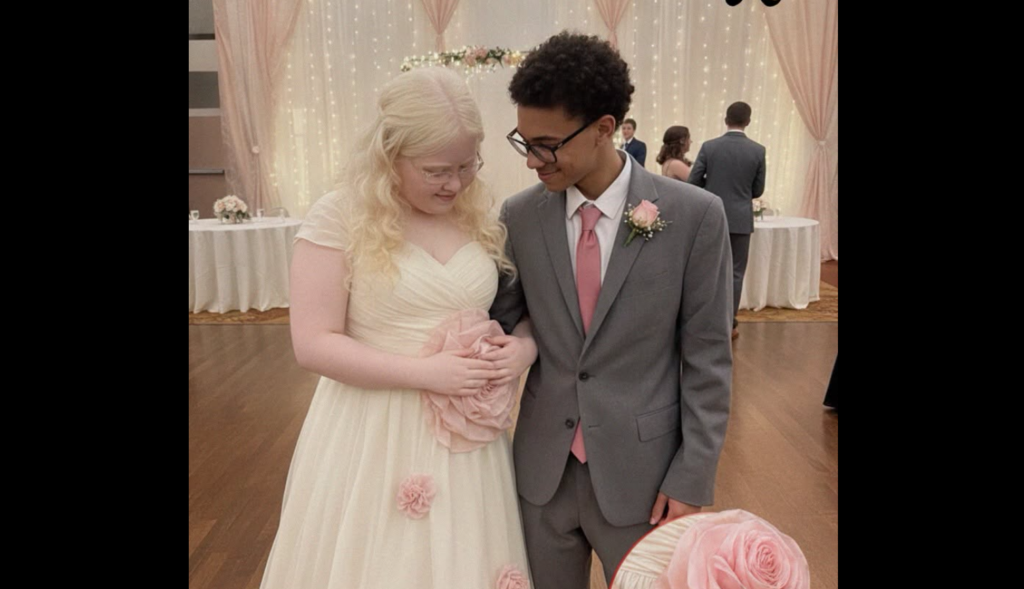
Ivory. Structured. Roses blooming in rows along the slope, like a garden someone had cultivated overnight.
I approached.
There was something inside one of the roses. Tiny stitches, words perhaps, tucked into the folds of the silk, where you would have to lift the petal to see it.
I was doing something that didn’t yet have a name.
I reached out and stopped.
This wasn’t mine to open.
I covered Eli with a blanket from her bed and turned off the lamp.
Walking home through the dark yard, I understood.
I wasn’t making a dress.
I was doing something that didn’t yet have a name.
The night of the dance arrived faster than she expected. Eli stood on the porch in a secondhand suit, a bag of clothes slung over her arm like it was sacred.
He used the name Mason for her.
Hazel opened her bedroom door to reject him. Then she saw the dress.
Ivory silk. Voluminous roses blooming down the skirt like a garden in motion.
“Eli,” he whispered. “Where have you…?”
“Put it on, Hazelnut.”
She used Mason’s name to refer to her. My knees almost buckled. I thought of Mason teaching her to drive with a manual transmission in our driveway the summer before he died, ruffling her hair like a little brother.
She shook her head, backing away from the bed. “I can’t. Eli, I can’t.”
I watched from the hallway as he brought both hands to his mouth.
He didn’t push. He left his lab coat on the desk chair and sat down on the floor, suit and all, leaning against the bookshelf. “Then I’ll sit here. Your brother made me a promise, before the accident. He said that if you ever shut up, I had to scream enough for both of us.”
She made a small, broken sound.
“One song,” Eli said. “That’s it. Then I’ll take you home.”
The silence lingered. I watched from the hallway as she brought both hands to her mouth, looked at the dress, looked at him. Then she lifted him from the chair as if he weighed nothing.
She came downstairs ten minutes later. For the first time in a year, my daughter looked in the mirror and didn’t flinch.
He inhaled. He exhaled. He took her arm.
In the car, he turned gray. At the gym doors, he stopped dead, one hand on the doorframe and the other gripping mine so tightly my ring bit into the bone.
“Mom, I can’t go in. Everyone’s inside.”
“One song,” Eli said softly from her other side. She didn’t play it. She just held out her arm and waited. “If you want to leave after the first note, we’ll leave. I swear.”
She inhaled. She exhaled. She took his arm.
Inside, heads turned. The same classmates who had been whispering fell silent. I stood in the parents’ section, devastated.
Then Eli went to the DJ booth. He stood there for a long moment before picking up the microphone, and when he spoke, his voice barely rose above the music.
His hands trembled as he put his hand inside the fabric.
“I’m sorry. I have to say something.” She swallowed. “Hazel. Look under the biggest rose.”
Her hands trembled as she reached into the fabric. She pulled out a folded piece of embroidered silk and made a sound I’d never heard from her before, then held it up so the light could catch the dark thread of the stitching.
“That dress,” Eli said, calmer now, as if he were only talking to her and the microphone was there by chance, “is made from every word that tried to break her. I turned each one of them into something else. One per night. For every night I had.”
He got out of the cabin without saying another word.
And tomorrow, I knew it, I would have breakfast at the table again.
The room stopped breathing. I watched the faces closest to the dance floor: I saw the moment a girl in a green dress recognized her own handwriting on a petal, I saw her hand fly to her mouth. I saw a boy two tables away stand very still.
She approached first. She whispered something in Hazel’s ear that I couldn’t hear. Then another girl. Then the boy, with tears streaming down his face.
Hazel finally cried. Not from embarrassment. From being seen.
That night I drove home alone and stood in Mason’s old bedroom. I rested my palm on his dresser.
“Someone kept your promise, darling,” I whispered. “I wasn’t alone.”
And tomorrow, I knew, I would have breakfast at the table again.