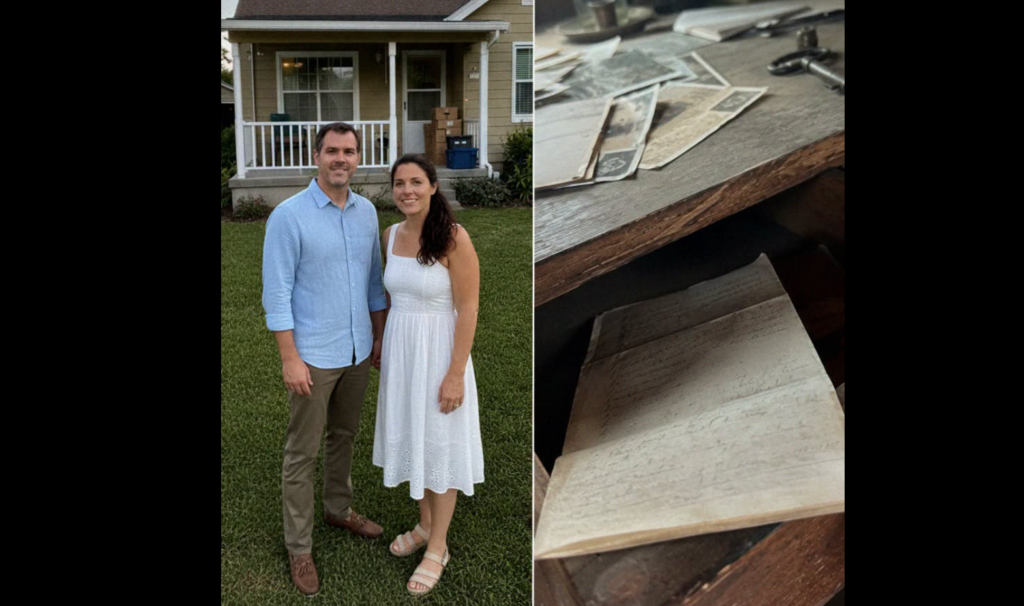
My wife and I moved into my grandmother’s little house thinking it was the only thing in our lives that no one could take away from us. Then the notices started arriving, each one demanding $80,000 for a debt that didn’t exist.
My wife, Elena, and I moved two states away because we needed a fresh start that was just ours.
The little house had belonged to my grandmother for over forty years. It was behind an old stone wall, with a narrow garden, a crooked porch, and windows that rattled every time trucks passed by on the country road.
The first bill arrived a week after we moved in.
When my grandmother died, she left it to me.
There was no mortgage, lien, or any debt associated with the property. All records confirmed this.
Elena said that place was our “new beginning.” I believed her, even though the house still smelled faintly of lavender, dust, and Grandma’s coffee grounds.
The first bill arrived a week after we moved in.
Eighty thousand dollars.
I opened it while I was having breakfast, read the amount twice and burst out laughing.
Eighty thousand dollars.
The letter stated that the small house served as collateral for an outstanding debt incurred decades earlier. It included no account number, the lender’s name, or a clear date.
Elena looked at her more closely than I did.
I tore it in half and threw it in the trash.
“Keep it,” she told me. “It seems official enough to be annoying.”
I tore it in half and threw it in the trash.
“Grandma never took out a loan mortgaging this house,” I said.
“Then someone has made a mistake,” Elena replied.
We finished breakfast and tried to forget about the subject.
In the second week, strangers started knocking on the door.
Three days later, another warning arrived.
Then a third one arrived by registered mail.
The amount never changed, but the tone did. From “overdue” it became “delinquent.” From “delinquent” it became “subject to immediate collection.”
By the second week, people we didn’t know started knocking on the door.
“I need to talk to you about the property debt.”
A man was wearing a gray suit and carrying a leather folder.
“I need to talk to you about the property debt,” he said.
“There is no obligation,” I replied.
“Show us the registered complaint.”
He smiled without warmth.
“That’s what everyone says before the final phase.”
Elena came closer to my side.
“Show us the registered claim,” he said.
He closed his folder.
At first, they came during dinner.
“You will receive the notification very soon.”
He left.
The calls started after that.
At first, they called during dinner. Then they called at midnight, at two in the morning, and once at three forty-seven.
Several voices repeated the same demand: eighty thousand dollars, to be paid immediately.
A woman told Elena that we should pack our bags before they changed the locks.
Some of the callers seemed bored. Others, angry.
A woman told Elena that we should pack our bags before they changed the locks.
“Do you realize that the threats are being recorded?” Elena said.
The woman laughed and hung up.
We changed our numbers, but the calls started coming in to my office and Elena’s cell phone within days.
First we went to the bank that managed Grandma’s accounts.
The house was still ours on paper. But, for some reason, people we didn’t know disagreed.
The first thing we did was go to the bank that handled Grandma’s accounts.
An official searched his records and then turned his screen towards us.
“There’s no mortgage,” he said. “No home equity loan. No court judgment on the property.”
Our lawyer, Denise, requested a full title search and called us two days later.
The county registrar said the same thing.
Our lawyer, Denise, requested a full title search and called us two days later.
“The little house is all yours, free of any encumbrances,” he said. “Legally, these people have no grounds to claim it.”
“So why do they keep coming?” Elena asked.
The following Tuesday, a broad-shouldered man arrived just after dawn.
Denise paused.
“Because someone believes there is an agreement. That belief can generate pressure, even if it doesn’t imply anything more.”
The following Tuesday, a broad-shouldered man arrived just after dawn.
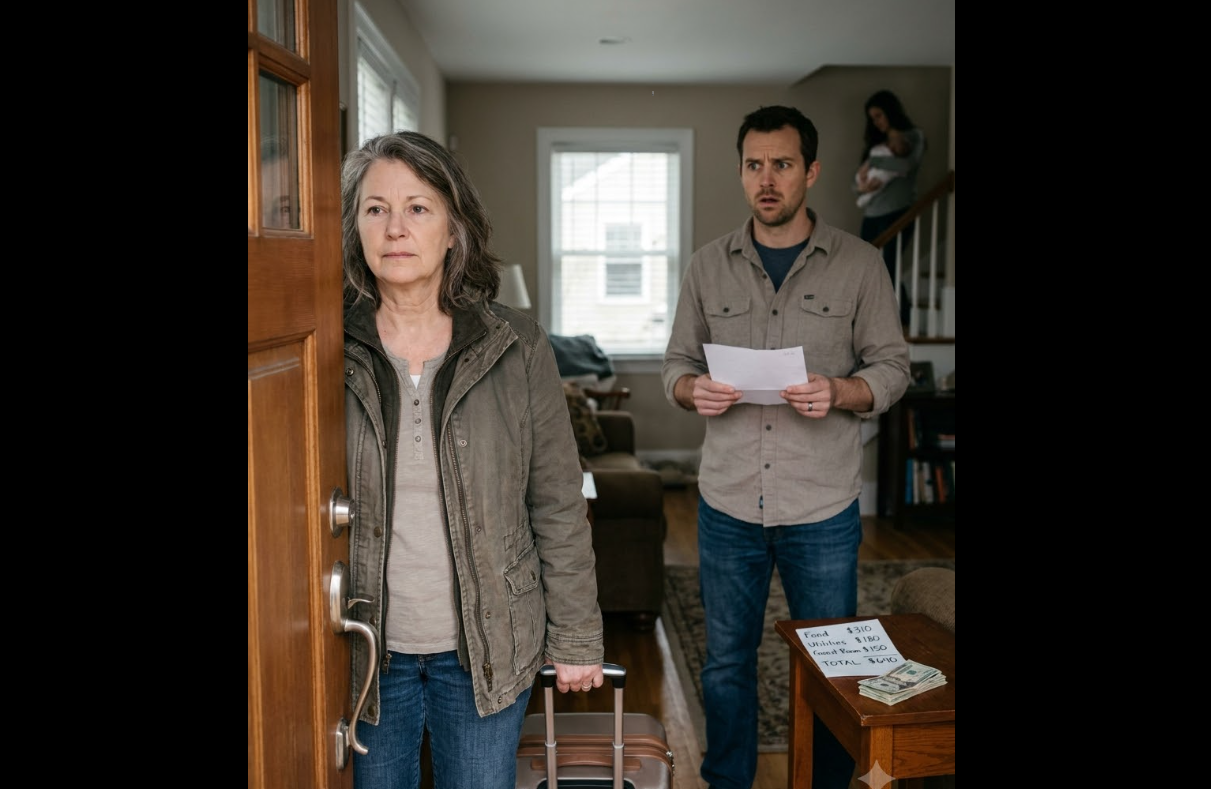
He handed me a red envelope stamped “LAST NOTICE”.
“Seventy-two hours,” he said. “After that, the embargo begins.”
“This house doesn’t guarantee anything.”
I looked past him, towards his unmarked car.
“Embargo on what?”,
“From the asset that guarantees the fund.”
“This house doesn’t guarantee anything.”
He shrugged.
When she left, I found Elena reading the notice on the kitchen table.
“Argue with those who hired us.”
When she left, I found Elena reading the notice on the kitchen table.
I expected her to be scared.
Instead, she remained very quiet.
“Where did Grandma keep the old papers?” he asked.
The shed was beyond the vegetable beds, slightly inclined towards the fence.
“In the shed.”
Elena looked for the keys.
“Where are you going?”
“To look for what others may have overlooked,” he replied.
The shed was beyond the vegetable beds, slightly inclined towards the fence.
I started pacing inside, called Denise, and read the last notice until the words blurred in my mind.
My grandmother had used it as an office after retiring from accounting. I had avoided tidying it because each drawer seemed somewhat personal to me.
Elena stayed there for three hours.
I started pacing inside, called Denise, and read the last notice until the letters blurred.
Then my mobile phone rang.
“I found a document hidden inside your grandmother’s desk.”
Elena sounded different.
She didn’t seem scared.
Stunned.
“I found a document hidden inside your grandmother’s desk,” he whispered. “It’s an account book.”
The account book contained sixteen surnames, each written in the grandmother’s careful print handwriting.
“What does it say?” I asked.
He took a deep breath.
“All”.
The account book had sixteen surnames, each written in the grandmother’s careful capital letters.
Behind them were dates, income, withdrawals, and brief notes.
“Thirty years ago, a storm damaged several houses around here.”
Elena spread the pages out on our kitchen table.
“Thirty years ago, a storm damaged several houses around here,” he said. “The families created an emergency fund. Your grandmother managed it because she knew about finances.”
“Was the money used for the house?”
I traced a faded total with my finger.
“Eighty thousand dollars?”
“In the end, yes,” Elena said. “The agreement states that the money was available until all the original members claimed their share or donated it for neighborhood improvements.”
Elena pointed to a separate savings account that was referenced in three entries.
“Was the money used for the house?”
“No”.
Elena pointed to a separate savings account that was referenced in three entries.
The little house only appeared once, along with a payment for the repairs to Grandma’s broken well.
“Someone saw this line and assumed that all the money had gone toward the property,” he said.
I vaguely remembered him, a tall neighbor who had attended Grandma’s funeral.
Alongside several notes appeared a name: Howard.
She vaguely remembered him, a tall neighbor who had attended her grandmother’s funeral.
Denise called him while we were listening.
“I found the contract,” Howard said. “The fund was never liquidated.”
“Why go after the house?” Denise asked.
Howard refused to reconsider.
“Because Margaret spent our money on her.”
“Just to fix a well,” Elena said.
Howard refused to change his mind.
He had contacted some descendants of the other families after finding an old copy of the agreement. Together, several of them had hired a private debt collection agency to pressure us into paying.
“Well, help us ask the people whose names appear there.”
“Margaret never told me the fund was closed,” he said. “Now her heir owns the asset.”
Elena leaned towards the phone.
“In the ledger there are check marks next to fourteen names.”
Silence fell.
“Checkmarks don’t prove anything,” Howard said.
We started with Rose, whose name had a check mark and the note “paid in full”.
“Well, help us ask the people whose names are listed there,” Elena replied. “If Grandma distributed the money, they might remember.”
Howard said he would just wait until the deadline.
And then he hung up.
We started with Rose, whose name had a check mark and the note “paid in full”.
Rose was eighty-two years old and lived three blocks away. She sat listening in a flowered armchair as Elena explained the account book to her.
Rose crawled over to a closet and came back with a yellowed receipt in her hand.
“Of course Margaret paid me,” Rose said. “She came with an envelope, a receipt, and two pens, just in case one failed.”
Rose crawled over to a closet and came back with a yellowed receipt in her hand.
The amount matched exactly what the grandmother had written down.
“He made me count it twice,” Rose said. “Then he wrote ‘paid’ next to my name.”
“Do you remember the part about Howard?” I asked him.
By evening, six families had presented evidence.
Rose frowned.
“Howard always thought Margaret favored certain families. He complained before the storm fund was even completed.”
The next family found a letter stating that they had donated their share for the community hall repairs.
Another man recalled that his grandmother had brought some receipts to his workshop.
By evening, six families had presented evidence.
Elena drew small circles next to the check marks.
Others confirmed the payments, but had lost the documentation.
Each story matched the ledger.
Elena drew small circles next to the check marks.
“We already have fourteen,” he said. “Only Howard and Millie Carter are left.”
“Howard says he hasn’t received anything.”
“Then Millie is our witness,” I said.
“She asked Howard and me to meet her at the bank.”
Millie lived in a council house near the old credit union.
He remembered his grandmother immediately.
“Margaret brought some papers in a blue folder,” he said. “She asked Howard and me to meet her at the bank.”
“Did Howard come?” Elena asked.
Millie shook her head.
“What happened to your share?”
“She said Margaret was controlling and refused.”
“What happened to your share?” I asked.
Millie tapped the ledger.
“Margaret didn’t keep it. She put her share on a certificate and left instructions for when he claimed it.”
Elena leaned forward.
“Margaret paid me that same afternoon. I signed it in the blue folder.”
“A certificate of deposit?”
“Yes. He said stubborn people deserved protection.”
Millie smiled.
“That was exactly how Margaret was.”
“And your share?” I asked him.
The credit union had changed its name twice, but its archived records were preserved.
“Margaret paid me that same afternoon. I signed it in the blue folder.”
The credit union had changed its name twice, but its archived records were preserved.
Denise contacted her legal department and explained the problem.
Since the account belonged to Howard, the bank didn’t reveal any details to us. They only agreed to contact him and ask him to come in with an ID.
He finally agreed to meet with us at the credit union the following morning.
Howard resisted until Denise told him that the collection process would be formally challenged and all threats would be documented.
He finally agreed to meet with us at the credit union the following morning.
An employee named Jonah led us to a small office under a clock that made a loud noise as it struck the hours.
Howard sat down opposite him, defensive and impatient.
After verifying Howard’s identification and reviewing the archived records, Jonah turned the screen towards him.
Jonah printed an extract and passed it around the desk.
“I found an inactive certificate opened in your name under the storm fund agreement,” he said. “It was never claimed.”
Howard stared at the screen.
“How much?”.
Jonah printed an extract and passed it around the desk.
The original amount was much less than eighty thousand dollars, but interest had turned it into a considerable sum.
Howard read the extract three times.
Elena sighed.
“Your money has been here all this time, waiting for you.”
Howard read the extract three times.
“Did Margaret do it?” he asked.
“After you didn’t go to the meeting,” Elena said. “Anyway, she protected your share.”
“You sent strangers.”
Howard sank even further into the chair.
“I thought I had buried the money in that little house.”
“You never asked us,” I said. “You sent strangers.”
Her face turned red.
“I was sure.”
Then Howard contacted the families he had recruited.
“You were wrong,” Denise said.
Howard nodded.
Before leaving the credit union, Howard called the collection agency and ordered them to stop contacting us.
Denise demanded written confirmation that the claim had been withdrawn and that the agency would not try again to collect the money for the cottage.
His share didn’t make him rich, but it was enough to make it worthwhile.
Afterwards, Howard contacted the families he had recruited.
“I was wrong,” he told Rose over the intercom. “Margaret either distributed the fund or protected every share. The house doesn’t owe us anything.”
Rose replied, “You owe his grandson an apology.”
Howard looked at me.
“Yeah”.
His share didn’t make him rich, but it was enough to make him important.
He called the local historical society, which already had photographs of the storm and minutes from neighborhood meetings.
And most importantly: the grandmother’s documents cleared her name.
For the first time in weeks, our phone stayed silent all night.
Elena refused to return the original account book to the shed.
“The paper caused this mess because nobody knew where it was,” he said.
He called the local historical association, which already had photos of the storm and minutes from neighborhood meetings.
Howard offered to draft a statement explaining the misunderstanding.
His archivist offered to preserve the original agreement, receipts, letters, and bank references.
“We should keep a copy here,” I said.
“A complete one,” Elena agreed.
Howard offered to draft a statement explaining the misunderstanding.
Denise added a proof of ownership report and a written waiver from the collection agency.
A month later, we invited the neighbors to the garden of the country house.
By Friday, the final red notice was nothing more than a useless piece of paper in our recycling bin.
Elena saw me throw it inside.
A month later, we invited the neighbors to the garden of the little house.
Rose brought lemon cake. Millie brought the blue folder that Grandma had used at the credit union.
Howard arrived with a bottle of wine and seemed uncomfortable until Elena handed him a glass.
He demanded receipts for every dollar and refused to round up even a single cent.
People told anecdotes about how the grandmother managed the fund from her kitchen table.
He had demanded receipts for every dollar and had refused to round down even a single cent.
A neighbor burst out laughing.
“Margaret was able to find a lost nickel faster than the bank could find an account.”
Even Howard smiled when he heard that.
“I should have sought answers before deciding that this house owed me something.”
Then he raised his glass.
Everyone fell silent.
“I should have sought answers before deciding this house owed me something,” Howard said. “Margaret protected my money more carefully than I protected her reputation.”
He turned towards me.
I didn’t tell you that everything was fine.
“I am sorry for the threats, the calls, and the fear I have caused you.”
I didn’t tell him that everything was fine.
I wasn’t.
“Thank you for clarifying this publicly,” I told him.
Howard nodded.
That night, after the last guest had left, Elena took our copy of the account book back to the little house.
Around us, the neighbors started talking again.
Elena squeezed my hand.
The little house no longer seemed like a disputed property. It seemed like Grandma’s house, which had been entrusted to us again.
That night, after the last guest had left, Elena took our copy of the account book back to the little house.
We sat down at Grandma’s old desk, the same one that had hidden the truth for years.
Below them, he wrote a sentence.
Elena opened the last page.
Now there was a check mark next to each surname, including Howard’s and Millie’s.
Below them, he wrote a sentence: “Account located. Misunderstanding resolved.”
“Too dramatic?” he asked.
“For Grandma?” I smiled. “It’s not detailed enough.”
Nothing was owed at home anymore.
Elena laughed, put the copy inside the desk and closed the drawer.
We just stood there in the room.
We had nothing left to settle at home.
Everything was accounted for.