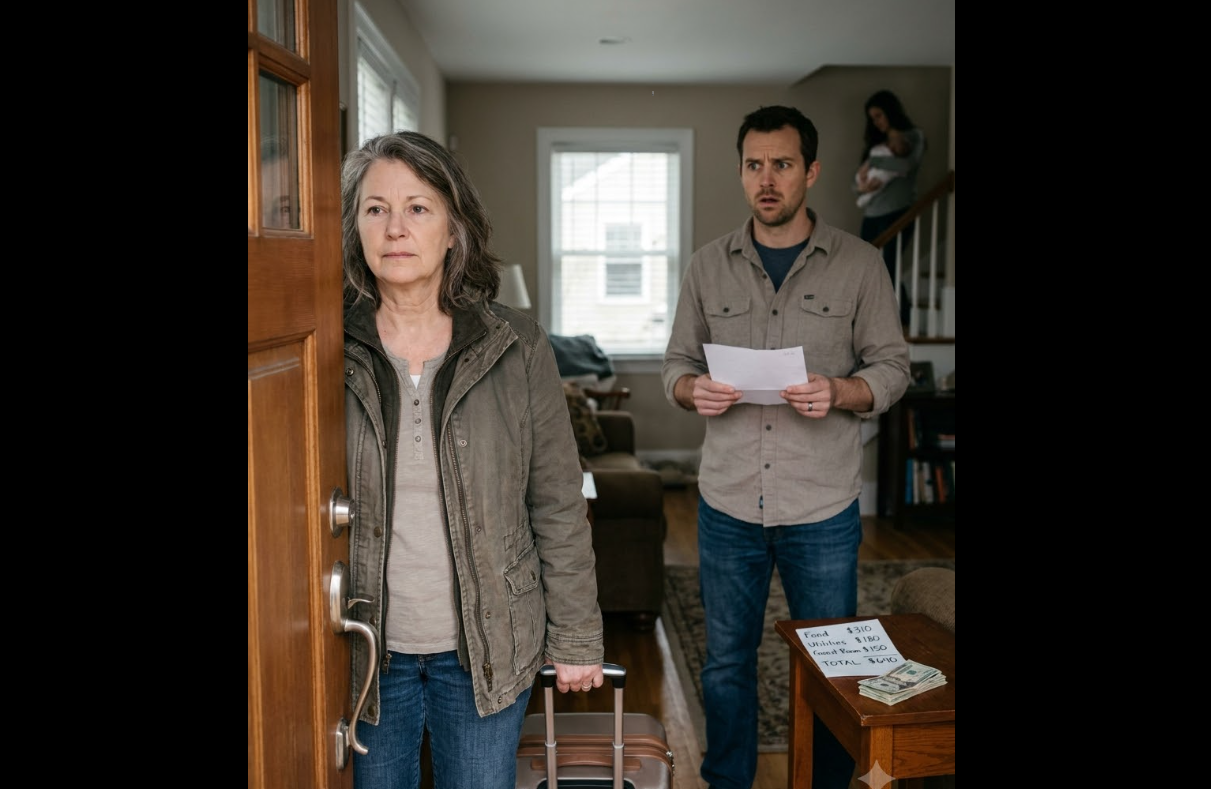
For eight years, I thought my father spent every Thursday going to the doctor, grocery shopping, and having lunch with our neighbor Ben. When Dad died, Ben gave me an envelope and said, “He made me promise I’d tell you where we were really going.”
Ten years ago, my father was diagnosed with glaucoma.
By the time doctors detected it, the damage was already severe. Within two years, he could barely see shadows.
Despite that, no one could convince him to leave his own house.
I lived almost a thousand miles away.
“The house still smells like your mother’s recipes, and it even has that dent in the hallway where you fell off your bike trying to do stunts inside the house,” he used to say.
“Leaving,” he said, “would be like wasting forty years with her again.”
I lived almost a thousand miles away, with two children, a demanding job, and married to a woman as ambitious as I was.
I needed help.
So we reached an agreement.
Dad could still take care of himself, but he needed regular glaucoma checkups and ongoing medical attention to make sure the disease wasn’t causing other problems.
Dad’s neighbor, Ben, had known our family for decades, and we’d long considered him one of the family. He was retired and itching to get back to work.
So we reached an agreement.
The plan gave me peace of mind.
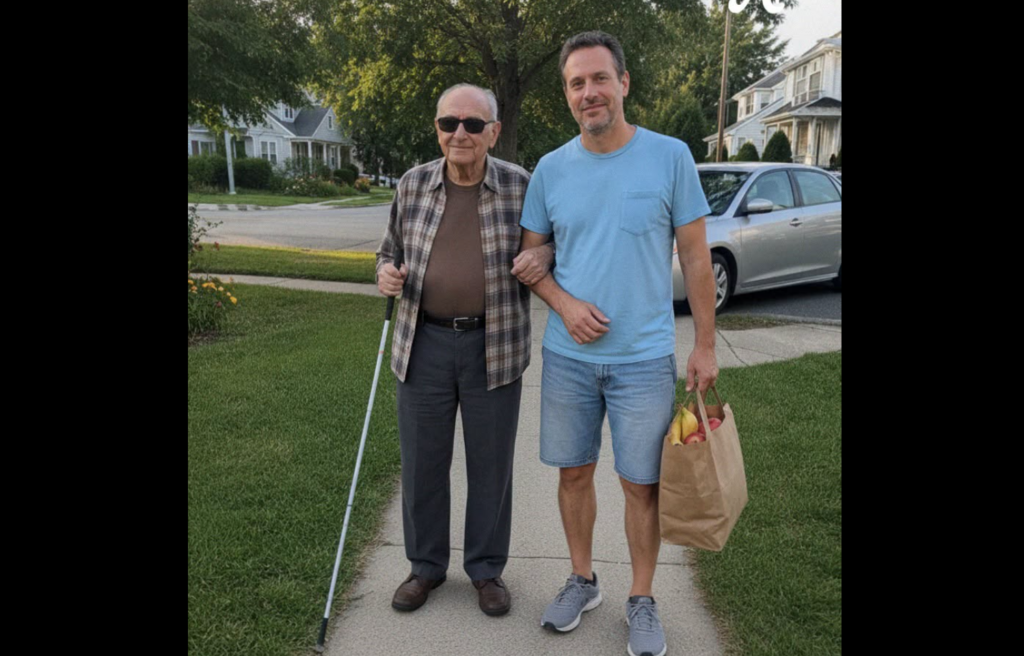
Every Thursday, I paid Ben to take Dad wherever he needed to go: glaucoma check-ups, the supermarket, the pharmacy, or out to eat.
Ben said, “Your father spent years helping people. Let someone return the favor without making him uncomfortable.”
The plan reassured me.
I visited him whenever work allowed, and Dad and I spoke every day. He told me about how he cooked by feel, the audiobooks he hated, and the checkers games that, according to him, Ben lost on purpose.
Dad never pressured me to visit him more often.
Upon hearing this, Ben shouted from the back: “He’s lying!”
Those calls became the best part of my day.
Dad never pressured me to visit him more often. He preferred to ask about my children and whether I’d eaten something decent.
Sometimes I would hear Ben arrive just before Dad hung up.
Their laughter made the distance seem smaller.
Doors opened, keys jingled, and Ben announced, “Your royal carriage awaits you.”
Dad would reply: “It smells like stale coffee and questionable decisions.”
Their laughter made the distance seem smaller.
For eight years, I thought Thursdays were normal days.
I kept thinking about our last call, which we had left unfinished.
Then, a few days ago, Dad passed away peacefully in his sleep. Ben found him Friday morning, still wearing the blue sweater my daughter had given him for Christmas the year before.
The funeral passed in a whirlwind of stews, handshakes, and people telling me that he had been proud of me.
I thanked them with a sad smile, but inside I couldn’t stop thinking about our last call, which we had left unfinished.
He had told me, “Thursday was a productive day.”
I promised him I would call him the next day.
I asked him what he meant.
Dad laughed and told me not to question an old man.
Then my daughter needed help with her homework, so I promised her I would call her the next day.
There was no next day.
After the burial, everyone headed towards their cars.
I didn’t move until Ben approached me, alone.
I stood by the grave, staring at the freshly turned earth and wondering how I was going to go on.
It started to rain lightly.
I didn’t move until Ben approached me alone.
He was wearing the same brown coat he had worn to my mother’s funeral.
He stopped beside me and handed me a sealed envelope, with my name scribbled on it in Dad’s handwriting.
His hands were trembling.
I reached out to grab it, but Ben was holding it tightly.
His hands were trembling.
Ben had been fixing roofs during the storms and had gone outside in his pajamas when he heard a noise between our houses. I’d never seen him so upset.
He looked at me.
“He made me promise that I would tell you where we really went.”
I thought he meant casinos, secret lunches, maybe some harmless rebellion that Dad had hidden because I worried too much.
“I didn’t just drive him around.”
I almost smiled.
Then Ben said, “I didn’t just drive him around. The places mattered, but what we did there mattered more.”
The rain intensified.
I put the envelope under my coat and asked him what he meant.
Ben stared at Dad’s grave.
Claire was Ben’s only daughter.
“Claire and I stopped speaking years ago,” he said. “When we did, we had a fight.”
Claire was Ben’s only daughter.
He remembered her as a clever and funny teenager who painted her room black and blamed the walls for him getting angry.
She moved away after college. Whatever happened after that, no one in town had ever told me.
Ben said that Dad had noticed his silence whenever he mentioned my children.
At first, Ben refused to give me any details.
One Thursday, Dad asked Ben, “What did you do?”
“Why do you assume I did something? It’s not my fault. You know she’s as stubborn as a mule.”
“To begin with, you’re defending yourself quite vehemently for an innocent man.”
That bothered Ben.
At first, Ben refused to give any details.
By then, Ben was already wiping a tear from his eye.
Dad kept asking questions. Knowing him, he wasn’t going to let something like that slide.
“By the third Thursday that your father had been insisting, I finally gave in. I told him all the sarcastic and careless comments I had made about her work and her family life. But the thing is, I missed her, and she never came to see me like you did.”
By then, Ben was already wiping a tear from his eye.
“I almost punched your father when he told me, ‘You’re missing out on so much. You miss your daughter, you’ve missed your chance to make peace with her. For God’s sake, man.'”
Dad told him to go to the downtown library that same morning.
Ben said he almost turned the car around.
Instead, Dad told him to go to the downtown library that same morning.
At the library, a very patient employee showed Ben how to send photos, record videos, and use emojis without it seeming like he was criticizing.
Dad sat nearby, listening.
Every time Ben complained, Dad would tell him, “Claire learned a lot to impress you. You can learn this too.”
Ben had made cinnamon rolls when Claire was little.
The following week, Dad had Ben drive to a bakery.
They bought flour, yeast, cinnamon, and so much butter that it would alarm a cardiologist.
Ben had made cinnamon rolls when Claire was little. He hadn’t made them since she left home.
They practiced in Dad’s kitchen and, of course, it turned out just as expected.
“This oven is a piece of shit, I’m telling you! I have to change it,” Ben grumbled.
“The oven didn’t forget to set the timer,” he said.
As evening fell, Ben was furious.
Then came the moment for apologies.
Ben recorded one in the car.
Dad heard it, shook his head, and deleted it.
Ben tried again during lunch.
Dad also deleted that version.
As evening fell, Ben was furious.
I looked down at the envelope.
“What do you want?” he finally asked her.
“Don’t defend yourself. Tell him why he’s important to you.”
Ben said that his dad repeated it to him so often that sometimes he could hear that phrase echoing in the back of his mind.
I looked down at the envelope.
Ben said it contained letters he had written but never sent.
The last letter had no corrections.
Ben had read them aloud, and Dad had told him which parts were awful, which ones needed a little tweaking, and which ones showed his true feelings.
The last letter had no corrections.
Dad told Ben that she was ready.
But Ben still couldn’t send it.
I pushed the envelope away.
“Your father gave me an instruction,” he said. “When he died, you had to make sure that I finished what we had started.”
Anger overwhelmed me.
I had buried my father just an hour ago, and Ben was already assigning me a task he had to do for another family.
I pushed the envelope away.
“No. I can’t do this for you today.”
Ben nodded, very understanding.
Ben gave me freedom every Thursday without ever making me feel helpless.
“There’s another note,” he said. “For you.”
I opened the envelope, despite my doubts. How could I never hear from my father again?
His letter was brief, typed, except for the signature.
My son,
Ben gave me freedom every Thursday without me ever feeling helpless.
Helping Ben was my way of restoring his dignity completely.
She described the sidewalks, the doorways, the food, and the faces to me, just so I would know what was happening. She drove me to appointments. She waited while I answered the doctors’ questions myself. She offered help without making me feel small.
Helping Ben was my way of restoring his dignity completely. And, in a way, he was helping you too.
You might think I was hiding something from you. And you were right.
I told Ben I would go with him.
I was hiding how useful I still felt.
I read that sentence twice.
I read it a third time and realized how much Ben had contributed to my father’s life. With a sigh, I looked at Ben.
“Okay. For my father’s sake, and for all the love you’ve given my family, I’ll help you. But I won’t be your replacement. I’ll just be there, just like you were there for Dad.”
We left the next morning.
Ben agreed.
We left the next morning.
Claire lived three hours away.
Ben rehearsed before we even got to the highway. Each version began with an apology and ended with proof that he’d been misunderstood.
“You like correcting me as much as you like correcting your father.”
I kept saying, “That part is an excuse.”
On the fourth attempt, Ben gripped the steering wheel tightly.
“You like correcting me as much as you like correcting your father.”
“We both like to be right.”
Ben snorted.
Ben thought about throwing the letter into the river.
“So today would have been Christmas for him.”
I burst out laughing, unable to stop myself.
We stopped once for a coffee, and Ben thought about throwing the letter into the river.
I locked it away in the glove compartment.
“You have no legal right to my email, you know?” Ben remarked.
She had Ben’s eyes and his same tempestuous personality.
“Isn’t that why you asked me to come with you?”
He didn’t take his eyes off the road.
***
After a while longer on the road, we finally turned onto a welcoming driveway.
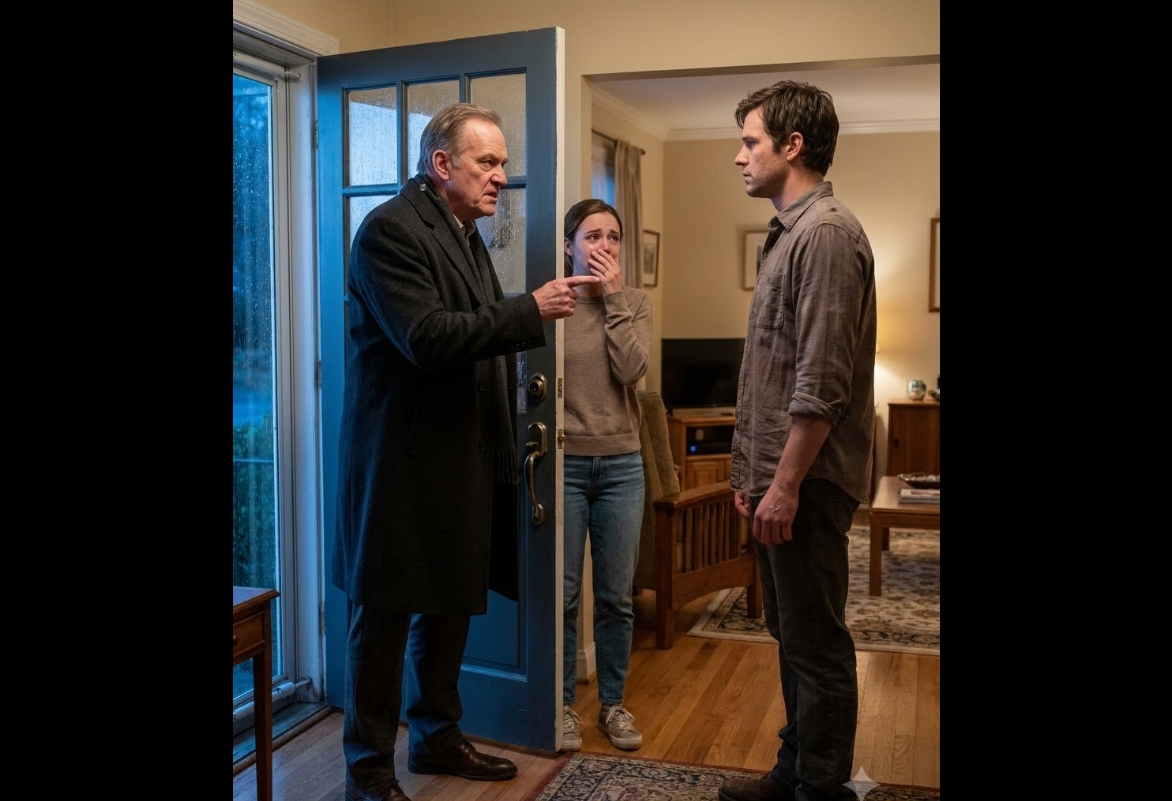
When we knocked on the door, Claire opened it wearing gardening gloves.
She had Ben’s eyes and his same tempestuous personality.
“I spent years protecting my pride.”
Her face hardened before she spoke.
“You should have called.”
Ben took a step back.
I approached him and whispered, “Tell him why he was important to you.”
Ben looked at Claire.
He handed her the letter and a box of cinnamon rolls.
“I spent years protecting my pride,” he said. “I hoped you’d come back because admitting I hurt you would mean I was wrong.”
He swallowed his saliva.
“I was wrong. And more importantly, I made you feel insignificant.”
She blinked.
He handed her the letter and a box of cinnamon rolls.
Finally, she opened the box, smelled the rolls, and looked at me.
“They might be awful,” he said. “This guy’s father wouldn’t even eat a whole one. But what did he know?”
Claire didn’t hug him. She didn’t forgive him. In fact, it was clear she still wanted to throw him off her porch.
Finally, he opened the box, smelled the rolls, and looked at me.
“Your father, huh?” he asked.
I nodded.
We sat talking for almost two hours.
Claire opened the porch door.
“I figured as much. This old badger would never apologize on his own.”
We stayed chatting for almost two hours.
Ben told her what his Thursdays were like.
He told her about the library, the bakery, the car rides past his old school, and the afternoons he spent recording apologies in his dad’s kitchen.
Claire listened to me and then took out a small wooden box.
I told him about the daily calls, Dad’s horrible jokes, and the empty chair waiting for me at home.
Talking about him freed me from something.
I could feel the pain unraveling and turning into a fond memory.
Claire listened to me and then took out a small wooden box.
Inside were unsigned postcards sent during the previous months.
Each one had one or two sentences written on it.
Pride takes its toll. I think he’s getting tired of all this.
One of them said: “Your father remembers more than he knows how to express.”
Ben covered his face with both hands, trembling.
Another postcard read: “Keep making cinnamon rolls wrong.”
A third one said: “Pride takes its toll. I think he’s getting tired of all this.”
Claire said she suspected Ben was sending them to her by pretending to be someone else.
Ben whispered, “I didn’t do it.”
“I still don’t trust you.”
We understood.
Dad had prepared both versions.
Claire stared at Ben for a long time.
“I can’t pretend we’re okay now,” she said. “I still don’t trust you.”
Ben nodded.
She pressed the letter to her chest.
“You don’t have to do it yet.”
She pressed the letter to her chest.
“A call on Thursday. Start there.”
“I will do that”.
On the way home, Ben apologized for keeping my payments after Thursdays became personal.
Dad had driven us both to the end.
“Oh, yes. I’d forgotten that part. Why were you still collecting the payments?”
Ben smiled at me.
“Your father said you would notice something strange if the agreement changed.”
He was right.
I stared through the windshield.
Ben began to defend himself.
Dad had driven us both to the end.
“Don’t think you’re going to get anything more out of this,” I told him with a mocking smile.
Ben began to defend himself, trying to make me believe that he had never wanted the money.
I raised a hand.
“You haven’t done anything wrong. You’re still taking care of my father. It’s just that the Thursday trips aren’t work for you anymore.”
“Your father wouldn’t agree with that.”
Ben remained silent for several miles.
Then he said, “Your father wouldn’t agree with that.”
“My father is no longer in charge here.”
Ben turned towards me.
“Do you really believe that?”
The following Thursday, I was still at my dad’s house, organizing tools and t-shirts that smelled like him.
I thought about the envelope, the postcards, and the journey here.
“No”.
The following Thursday, I was at Dad’s house organizing tools and T-shirts that smelled like him.
At nine o’clock, the crunch of tires was heard outside.
Ben arrived out of habit, but froze when he saw me waiting on the porch.
Ben looked towards Dad’s empty window and then picked up a cup.
I had two coffees.
—I suppose the royal carriage still runs on Thursdays—I said.
Ben looked at Dad’s empty window and then picked up a cup.
“The carriage appears to be empty now.”
“Well, if you’d like, we can go for another walk later,” I smiled.
Ben walked past the library, the bakery, and Dad’s office.
“Oh, why bother? You’d just get tired of all my descriptions of things. Besides, I’m not very good company.”
“I think you underestimate my ability to put up with stubborn old people,” I laughed.
We finished our drinks and went for a walk with no particular destination in mind.
Ben walked past the library, the bakery, and Dad’s office.
At every turn, he was about to say something.
Claire’s name appeared on the dashboard.
Then his mobile phone rang through the car speakers.
Claire’s name appeared on the dashboard.
Thursday, right on time, waiting.
Ben prepared to press the button, stopped, and began to whisper the phrase he had planned to start with.
I touched her wrist.
She held back her tears and nodded.
“Without rehearsal.”
She held back her tears and nodded.
Ben pressed the reply button.
“Hello, Claire,” he said.
His voice was trembling, but he said it anyway…
The car was silent for a second.
Claire said, “Hello, Dad.”
Ben exhaled as if he had been holding his breath for years.
I looked at the passenger seat, where my father should have been.
The car seemed empty to me for a second.
While the two of them were talking, I took out my father’s letter once again.
I hope he would be proud of how he taught me to help.