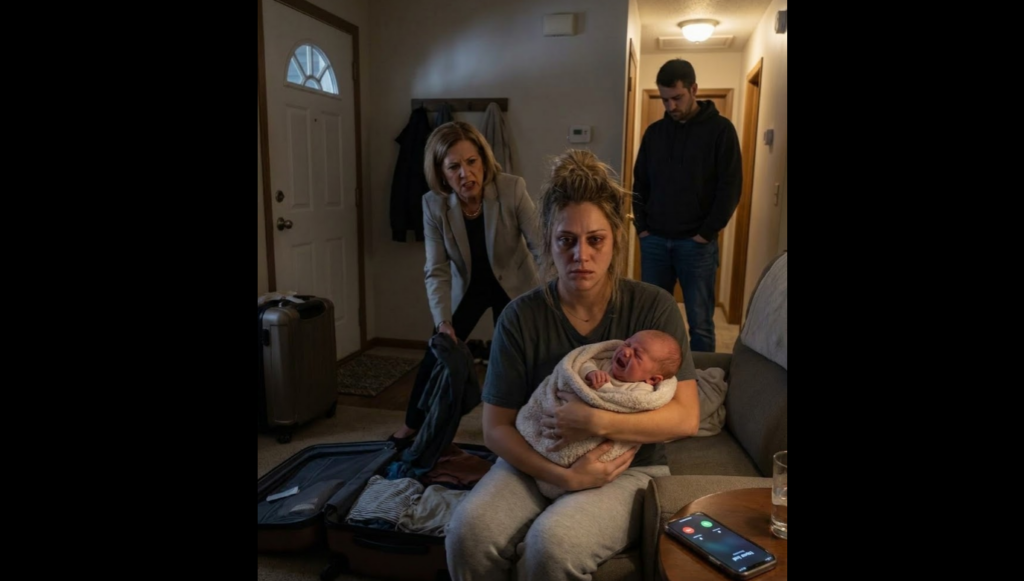
The first time my husband looked at our sick baby as if she belonged to someone else, I knew our marriage was falling apart. What I didn’t know was that the real betrayal had started weeks earlier.
The baby’s room smelled of warm milk and lavender soap. I rocked Lily against my chest, counting her breaths as she slept. Three months of motherhood had made me a calmer person, but I still remembered how we were before.
Before Lily came along, David was the gentlest man I knew. He would stop stuttering whenever he was nervous or trying to lie, and I loved him for that reason in part. A man who couldn’t lie gave me the feeling of being a firm anchor.
“They will stop respecting you as a man.”
“I-I want the full twelve weeks,” she had told me last summer, with one hand on my belly. “Every diaper. Every bottle.”
“You don’t have to prove anything,” he had told her.
“I’m not proving anything. I’m promising you.”
She had signed up for prenatal classes without me asking her to.
She had told her coworkers, at the top of her lungs, that she planned to stay home for the first three months. She remembered Susan’s voice, broken by the phone one afternoon, as sharp as a twig breaking.
“Paternity leave? That’s the dumbest idea in the world, David. If your colleagues see you sitting around in diapers, they’ll stop respecting you as a man.”
“I had no other choice.”
David had taken it as a joke then. “M-mom, it’s already approved.”
I smiled as I drank my tea and thought, “Everything is going to be alright.”
Looking back, I should have known that that conversation wasn’t completely over.
Three months later, I was raising our daughter alone, while David insisted that his company had revoked his paternity leave at the last minute.
“They need me back,” he said. “I had no other choice.”
I never questioned it. I simply adapted, as first-time mothers always do.
Every morning he would leave wearing an ironed shirt and the tie that I had chosen for him.
Without stumbling. Without stuttering.
“A hard day?” I asked him.
“Brutal. Absolutely brutal.”
Soft. Each syllable as soft as a river pebble.
I realized it the same way you realize a clock has stopped, a second too late.
“Are you okay?” I asked him one night.
“I’m fine, Em. Just tired.”
Lily’s temperature rose around midnight.
Without hesitation. Without stuttering. Nothing.
I pushed that thought away and told myself that first-time parents had a right to be tired.
Then Lily started to whimper. David’s car had already left the driveway, and I was alone again with a crying baby and a feeling I didn’t know how to describe.
Two nights after I realized the stuttering was gone, my body no longer felt like my own. Lily’s temperature spiked around midnight, and her little cries became hoarse after hours of sobbing.
She was pacing the corridor wearing the same milk-stained t-shirt she had been wearing since Tuesday.
The guest room door was closed. It had been closed for almost two days.
“Real men don’t change diapers.”
I thought about the Sunday when Susan cornered David in the kitchen. Since her father’s heart attack, she came to visit us every week and called almost every night.
I was breastfeeding her nearby when she lowered her voice.
“Real men don’t change diapers, David. Your father never did, and look at you now. If something happens to him while you’re here folding the baby’s clothes, how do you think you’ll be able to live with yourself?”
She expected him to laugh, like he usually did when she started on about it. Like he had in February, when he told her, “Mom, it’s been approved,” referring to his paternity leave.
He didn’t laugh. He didn’t say anything at all.
He returned to the table in silence, and since then he has become quieter and quieter every Sunday.
“Going back to work was the right thing to do.”
That afternoon, after Susan left, I found him standing by the kitchen sink, with the tap running over an empty coffee cup.
“Are you okay?” I asked him.
David kept staring at the sink.
“Mom thinks going back to work was the right thing to do.”
“I thought you had no other option. They cancelled your discharge.”
“I was starting to lose myself.”
“Yes.” He rubbed the back of his neck. “She says it might have happened for a reason.”
“What reason?”
“That I was starting to lose myself.”
“For taking care of your daughter?”
She shrugged. “He says Dad would never have stayed home.”
“It has a temperature of 39°C.”
“Do you believe him?”
David didn’t answer. He turned around, left the kitchen, and got in the shower.
That silence frightened me much more than any argument would have.
I knocked softly on the door, then louder. “David. Please. Ten minutes. I just need to take a shower.”
“I have to work in the morning,” her voice sounded muffled.
“When was the last time you stuttered?”
“She’s sick. She has a temperature of 39°C.”
The door opened a crack. David didn’t look at Lily. He looked at me as if I were the one bothering him.
“Emma, I’m the one who earns the money in this house. That’s my contribution. You knew what you were getting into.”
The sentence came out clear. Fluent. Without stumbles, without hesitation on the difficult consonants.
David had always stuttered over the word “money” ever since I’d known him, especially when he was tired.
“Susan, you can’t just walk in here.”
That night, nothing.
I stared at him, rocking my daughter against my shoulder. “When was the last time you stuttered?”
“That?”.
“Nothing.” I took a step back.
He closed the door.
“He promised to be a father.”
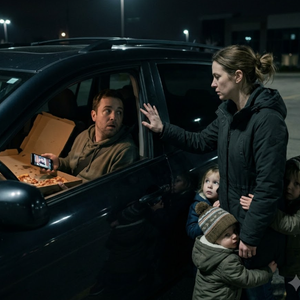
At eight o’clock sharp, I heard the lock on the front door turn. Susan had a key I’d forgotten I had. She walked past me down the hall without looking at me, past Lily’s flushed face, and headed straight for the guest bedroom.
“Susan, you can’t just walk in here like that,” I said, following her as she rocked the baby. “It’s eight o’clock at night.”
“David called me.”
“Well, let him come out and talk to me himself. Please, I just need someone to hold her for an hour.”
She took a suitcase from the closet and began folding David’s shirts. “My son works incredibly hard to support this family,” she said, without looking up. “He needs to sleep. He didn’t get involved in this.”
“I can’t keep doing both things.”
“He promised to be a father.”
“He promised to be a husband . There’s a difference.”
David appeared in the doorway, his hands in his pockets and his gaze fixed on the carpet.
“Mom’s right,” she said softly. “I can’t keep doing both things at the same time.”
He looked like a child waiting to be allowed to get up from the table.
The front door clicked shut behind them.
Susan zipped up the suitcase. “Come on, honey. You’re coming home with me until she calms down.”
“Home?” I whispered. “This is your home.”
“Not tonight.”
She walked right past me without looking at me. David followed her, without looking up, without saying anything.
The front door clicked shut behind them.
I stood in the hallway with my feverish daughter in my arms and watched as the taillights of Susan’s car drove away down the driveway until they disappeared.
By tomorrow everything would have changed.
The tears didn’t come.
In the hallway window, I saw a woman in a stained t-shirt holding a sleeping baby. No one else was visible in the frame.
I kissed Lily’s hot forehead, knowing that everything would change in the morning.
Just before dawn, Lily finally fell asleep in her crib. Her small chest rose and fell in the pale, grayish light.
I moved around the house in silence, picking up the remnants of these forty-eight hours.
PAID PARENTAL LEAVE.
The guest room still smelled of David’s cologne. Empty hangers swung in the closet, but Susan hadn’t touched the nightstand.
At the bottom of the drawer, I found a manila folder labeled with David’s handwriting.
I opened it in bed. The approval letter I already knew about, from three months ago. The one he’d been showing around, the one Susan had gotten upset about on speakerphone.
But underneath was a stack of payroll slips I’d never seen before.
Each one had a stamp in small gray letters at the top: PAID PARENTAL LEAVE.
Three months’ worth of them. Every two weeks, with clockwork precision. Deposited into an account that ended in 4821 .
His lies had become our routine.
I stared at the last four digits.
I had seen them before.
They appeared on the birthday checks that Susan always wrote from the joint account she still shared with David.
I read the dates three times. Then a fourth time.
My hands weren’t shaking. A hollow laugh escaped me.
I already knew what I had to do.
Then my knees buckled and I collapsed onto the mattress, still holding the folder.
Three months preparing his food, giving him a goodbye kiss, and believing every exhausted smile.
His lies had become our routine.
A cry was heard through the baby monitor.
I dried my face with the back of my hand, got up, and went to see Lily.
By the time she snuggled up against my shoulder, I already knew what I had to do.
“When did David return to work?”
Only then did I look for my phone.
First I called Rachel, my friend from David’s office, because I couldn’t wait for the rest of the world to wake up.
“Emma? Is everything alright? It’s very early.”
“Rachel. I need you to be honest with me. When did David return to work?”
There was a long pause. I could hear him breathing.
“He’s been spending every day at Susan’s house.”
“Um, he hasn’t come back. We all thought you two were into being a involved father. He was so excited about the leave, remember? He showed us all the approval letter.”
I closed my eyes.
Susan lived twenty minutes away. Every afternoon, David came home smelling of his cooking. Every paycheck from his sick leave had gone into the joint account they still shared.
Suddenly, the remaining hours had a purpose.
Without hesitation. Not once.
“Thank you,” I whispered.
“Emma, what’s wrong?”
“He’s been spending every day at Susan’s,” I said. “For three months.”
Rachel let out a small moan of pain.
“Oh my God, Emma. I’m so sorry.”
“He’s very sensitive, David.”
“You couldn’t have known,” I said. “Neither could I.”
I stared at the blank screen. Saying it out loud hurt more than reading it on a piece of paper. Rachel’s response had crushed my last hope of an explanation.
I sat on the floor of that guest room with the folder in my lap and thought about all those nights when he came home smelling faintly of Susan’s rosemary chicken and lavender detergent.
I thought about how smooth her voice sounded when she complained about her boss. Without stuttering. Not once.
Then another memory came to mind.
I couldn’t be trusted.
A week after Lily was born, I walked into the kitchen just in time to hear Susan say, “She’s sensitive, David. It’s what happens after having a baby. Don’t argue with her. Let her calm down.”
At the time I took it as a joke.
Now I wondered how many of my tears she had silently turned into proof that I could not be trusted.
At nine o’clock, I called his office, using that professional tone I had perfected in accounting.
“In fact, he’s on paternity leave.”
“Hi, I’m scheduling a delivery for David. Could you confirm he’ll be in the office on Monday?”
“Actually, he’s on paternity leave until the end of next month,” she said cheerfully. “Do you want his personal number?”
“No. Thank you. That’s just what I needed.”
I left the phone on the folder.
I remained completely still.
It was about protecting her.
I looked towards the baby’s room.
Lily was asleep, with one little hand folded next to her face.
What happened next had nothing to do with punishing David.
It was about protecting her.
I called a family lawyer, my bank, and a locksmith.
“You sent an email to his boss! To Human Resources!”
Then I drafted a very careful email to David’s boss and the HR director, attached copies of the termination documents, and scheduled the sending for ten o’clock.
At ten o’clock sharp, my phone started ringing nonstop. I answered it and moved it away from my ear.
“How could you do this to us?” Susan shrieked.
I let her scream until she was hoarse before speaking.
“What exactly have I done, Susan?”
“You’ve ruined it.”
“You emailed his boss! Human Resources! Now everyone in that company is going to find out!”
“Only his boss and Human Resources received him,” I said calmly.
“Don’t be naive. They’ll tell everyone.”
“I thanked them,” I said calmly. “For the twelve weeks of paid paternity leave that David has been quietly enjoying at your kitchen table.”
Silence. Then, a softer, but higher-pitched voice.
“That silence ends today.”
“You had no right.”
“I told them that he had convinced me that his leave had been cancelled, while he spent every working day somewhere else. I thought they deserved to know why he had never been home to his daughter.”
“You’ve ruined it.”
“He didn’t get involved in this, did he? Well, neither did Lily: a father who lied to her mother for three months. A man who couldn’t say a single sincere sentence without stuttering built a whole life of silence around a single lie. That silence ends today.”
“It was easier to disappoint your wife than your mother.”
I hung up.
David arrived that afternoon, pale, stuttering more than I had ever heard him stutter.
“Um, p-please. I-I can explain.”
I looked at him for a long time.
“I know why you did it,” I said quietly. “It was easier to disappoint your wife than your mother.”
His face crumbled.
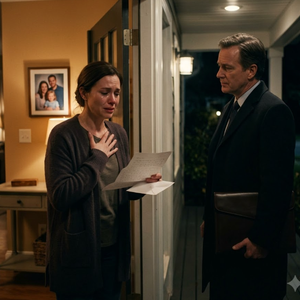
“The papers will arrive this week.”
“You kept telling yourself it was temporary. One more day. One more lie. One more morning pretending to go to work. By the time you realized what you had become, three months had already passed.”
She covered her face with one hand.
I handed him a folder.
- The Human Resources letter.
- A preliminary letter from my lawyer outlining the next steps.
- A proposed schedule for supervised visits.
“The papers will arrive this week,” I told him. “You should leave. Your mother is waiting for you.”
She could not choose the family she was born into.
He left without saying anything else.
I closed the door.
A moment later, Lily moved in her room.
I crossed the hall before she could cry, picked her up in my arms, and rested my cheek against her soft hair.
I couldn’t choose the family I was born into. But I could choose the example I would grow up with. I would never learn that gaining someone’s approval was more important than keeping your promises.