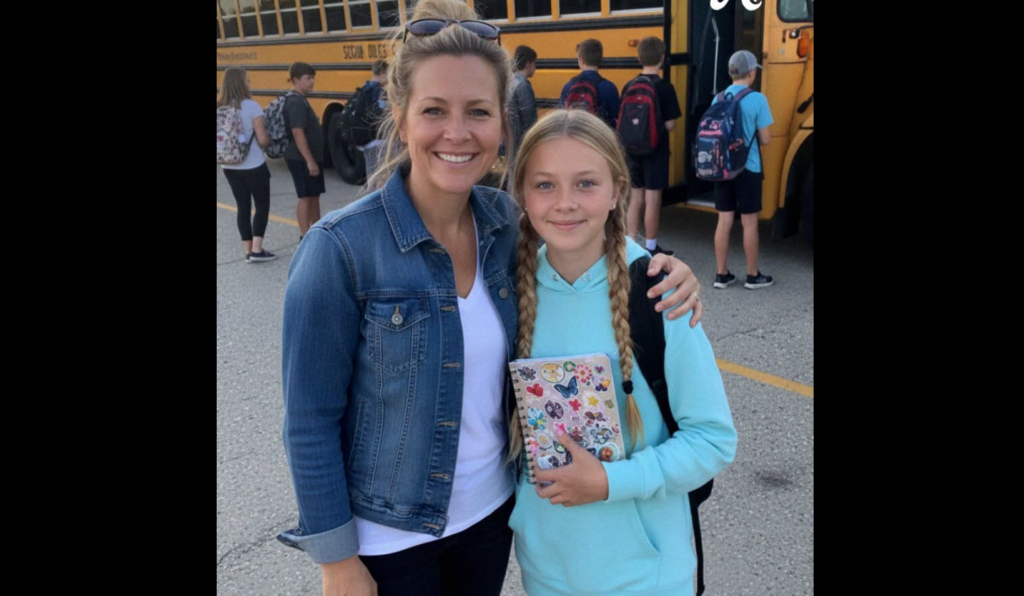
I expected my daughter to come home from summer camp with lots of stories, new friends, and a suitcase full of dirty laundry. Instead, she came back shrouded in a silence I couldn’t understand.
That summer, the laundry basket stood between me and the TV. I was folding Kathleen’s clean clothes from camp into three neat little piles on the sofa cushion. T-shirts, shorts, and that hoodie she insisted on taking even though the forecast predicted 26°C for two weeks straight.
By the time I was 35, I had already folded a ton of my daughter’s clothes. The truth is, I never got tired of doing it. Each pile felt like proof that I was managing just fine on my own.
“Mom, are you even listening to me?”
The truth is that I never got tired of doing it.
***
My 13-year-old daughter was one of those kids who never stopped talking about school, making friends everywhere she went and telling me every single detail of her day. She’d spend weeks talking about how much fun she and her friends were going to have and counting down the days until the bus left.
Kathleen was sitting on the kitchen counter behind me, swinging her feet against the cabinet, just like I’d asked her a thousand times not to do. Her sketchbook, that worn, hardcover one she’d loved for years and carried everywhere, was open in her lap.
I had asked you a thousand times not to do it.
***
“I’m listening. You said archery, canoeing, and the night hike.”
“And the talent show. And Brenda says there’s a real bonfire, not one of those fake gas ones.”
Brenda was one of Kathleen’s friends.
I glanced over her shoulder. She was beaming, like teenagers often are when something they’ve marked on the calendar is finally within reach.
She was radiant.
“Two weeks is a long time, Kath.”
“Two weeks is nothing. You always say that when you go on a business trip,” he retorted.
“That’s different.”
“Well, I’ll be back in a jiffy, just like you.” My daughter rolled her eyes affectionately. “Mom. It’s camp. Everyone goes.”
I left a folded t-shirt on the table. “Everyone, including Brenda?”
“Of course. And Maya. I’ve saved her a seat on the bus so she doesn’t feel left out again. You know how she gets.”
“That’s different.”
I nodded because I did know.
For two months, Kathleen had been the one including a girl named Maya in group photos, at the dinner table, and in birthday plans. My daughter has a good heart. That was the part I’d never worried about.
“Although Brenda has been acting a little strange lately,” Kathleen added, almost to herself. She was twirling the pencil between her fingers. “With the whole ‘who sits where’ thing. But it doesn’t matter.”
That was the part I had never worried about.
“Is this something I should be worried about?”
“No, Mom, it’s nothing. It’s just girl stuff.”
I didn’t dwell on it. I told myself that girls her age were like their own weather system, and you couldn’t predict every cloud.
The camp counselors were well-chosen. Her best friends were going. Kathleen was responsible.
I was looking forward to hearing all the stories she would bring home.
“Is this something I should be worried about?”
“Do you promise you’ll send me a message?” I asked him.
“Every day”.
“Every two days is fine.”
“Mom,” Kathleen jumped off the counter and came to my side, so close I could smell her strawberry shampoo. “I’ll be okay.”
“I know it is.”
“So why are you folding the same shirt again?”
“I know you’ll be okay.”
I looked down. Sure enough, he was folding the same t-shirt again.
“Because I’m your mother, and that’s my job.”
She laughed, that broad, sincere laugh that used to fill the whole apartment when she was five years old, and rested her head on my shoulder for a second before moving away.
“That’s my job.”
“Can I take my sketchbook?” my daughter asked.
“Of course”.
She smiled from ear to ear and disappeared down the hallway to go look for him.
I sat there with a hoodie on my lap, wondering how a person could go from being a baby to becoming someone who thought about saving spots for lonely friends.
He smiled and walked down the hallway.
***
The morning the bus left, I stayed in the school parking lot with a coffee in a paper cup that I never drank.
Kathleen gave me a big hug and ran off with Brenda before I could say anything embarrassing.
From the bus window, I watched them settle in. My daughter laughed at something Brenda said. Then her friend leaned over her shoulder toward the quiet girl in the seat next to them, and my daughter’s smile faded for a second before she realized what was happening and waved at me.
Kathleen gave me a big hug and ran off.
I returned their greetings and whispered, without addressing anyone in particular, that two weeks would fly by.
I had no idea what my daughter was taking with her on that bus.
***
During the first week of camp, my mobile phone became a small shrine.
I looked at it between washes, between customer emails, and between heating the same cup of coffee three times.
I had no idea what my daughter was taking on that bus.
I’d send Kathleen long messages every couple of days. Photos of the neighbor’s cat sitting on our porch. A funny anecdote about the woman at the pharmacy who called me “honey” four times in a single visit.
His answers were always brief.
“Everything is going great!”
“I’m having a great time!”
“I love you, Mom!”
He would send Kathleen long messages.
I kept telling myself that I was busy having fun and didn’t have time to be on my phone.
Teenagers at summer camp weren’t supposed to be sending long texts to their mothers. If anything, short replies were a good sign, right?
***
By the second week, I stopped sending him long messages.
I didn’t want to seem like the clingy mother.
I kept telling myself I was busy.
***
On pickup day, the parking lot was chaotic.
Travel bags, sunburned faces, and children shouting names all over the asphalt.
Kathleen came running straight to me and hugged me tightly. Tighter than a hug should be after two weeks , I remember thinking, but I justified it by saying I missed home.
“How have you been, darling?”
“Great,” he said, smiling against my shoulder.
“How have you been, darling?”
***
On the way home, I asked her about the rope course, the canoe race, and the campfire skits you’d been rehearsing in the living room for a month. Kathleen answered, but her replies lacked substance.
“It was fine, Mom. I’m tired.”
I didn’t insist.
She’d been away for two weeks. Of course she was tired.
“I’m tired”.
***
The outcome was silent.
On Monday, the sketchbook was still on my daughter’s nightstand. On Tuesday, it was in the same place, open to the same page. I realized I hadn’t seen her open it even once since I’d come home.
***
During dinner, Kathleen kept turning her food around on her plate and answered my questions with monosyllables. She stared intently at her phone with an expression I didn’t recognize. She wasn’t scrolling, just staring.
The outcome was silent.
My daughter had stopped talking about her day and seemed sad almost all the time.
“Kath. Talk to me. Has something happened at the camp?”
He shrugged.
“I had a fight with a friend. Over a photo. It’s silly.”
“A picture of what?”
“It doesn’t matter, Mom.”
“A picture of what?”
I assumed he was referring to Brenda.
I remember thinking: of course, 13-year-old best friends fighting over nothing. Typical.
“Do you want me to call Brenda’s mother? We could…”
“Mother!”.
Her voice sounded high-pitched for half a second, and then it became soft again.
“It’s okay. Really. I just need a couple of days.”
I assumed he was referring to Brenda.
***
The days turned into a week. The sketchbook didn’t move.
One night I watched Kathleen from the doorway, curled up on her side, her phone face down on the pillow beside her. She wasn’t crying. My daughter, my chatterbox, had gone somewhere I couldn’t follow her, and every time I tried, she forced a smile and closed the door.
I kept telling myself I had to give her space. She’s a teenager. She has the right to have her problems with her friends without her mother organizing a peace summit.
But something kept whispering to me that that wasn’t the whole story.
The days turned into a week.
***
My mobile phone rang on a Wednesday afternoon.
I barely answered it. I was very busy with work.
“Hello?”.
“Candice? I’m Mr. Paulson, the assistant principal at Kathleen’s school.”
I gripped the phone tightly.
I was working from home to be with my daughter , because classes hadn’t started yet.
I hardly ever answer.
“Yes, it’s me.”
“I’d like you to come and talk to me, if you can.”
“Did you forget something at camp? Can I…”
“Candice, please come to school. Alone.”
Her voice sounded calm but serious, as if she were choosing each word carefully.
“I’d like you to come.”
I sat upright in the chair without realizing it.
Before I could ask why, she added quietly, “Your daughter hasn’t told you everything that happened at camp. And I think you and I should talk before she finds out.”
I don’t remember saying goodbye or getting up.
I don’t remember saying goodbye.
I looked down the hallway.
Kathleen’s door was closed. It had been closed for eight days straight.
“Honey, I have to step out for a few minutes! I’ll tell Mandy and she’ll come and look after you,” I yelled.
“Okay, Mom!”
I picked up my bag and headed to my neighbor’s house.
Kathleen’s door was closed.
Mandy worked from home full-time and didn’t mind taking care of Kathleen.
By the time I got to my car, Mandy was already on my porch, with her laptop in her hand.
***
The school seemed too quiet when I parked in the parking lot. My sandals clattered against the tiles as I hurried down the empty hallway.
The school seemed too quiet to me.
Mr. Paulson greeted me at the door of his office with a slight nod.
He pointed out the chair in front of his desk and slid a printed sheet of paper in front of me before I even sat down.
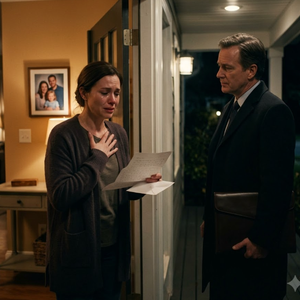
I looked at her and put my hand to my mouth!
It was Kathleen’s face. Someone had pasted it over an embarrassing image, accompanied by a cruel caption mocking her drawings and her clothes. There were a bunch of heart emojis at the bottom, as if it were some kind of joke everyone was in on.
I covered my mouth with my hand!
“This circulated in a private chat group created by the girls at camp,” Mr. Paulson said quietly. “A counselor confiscated a cell phone after another incident, and we recently found the original file.”
“I knew it,” I whispered. “Brenda! She’s been getting away with it with Kathleen for weeks. Even Kathleen told me.”
The assistant director let me finish. Then he folded his hands on the desk.
“Candice, it wasn’t Brenda.”
I looked at him, blinking.
“A monitor took away one of their cell phones.”
“The edit history was intact. The file was created and sent by the new girl, Maya.”
The truth is, I burst out laughing.
“Maya? Kathleen has been saving a spot for that girl ever since she arrived. She invited her to join the group when no one else wanted to. That doesn’t make sense.”
“I know,” Mr. Paulson said gently. “But that’s what happened. And from what the monitors have been able to piece together, it was actually Brenda who told Maya to delete it. When Maya refused, Brenda stopped talking to her. That was the argument the girls had.”
The truth is, I burst out laughing.
I leaned back in the chair. Suddenly, it seemed too small.
All the conversations I had had with my daughter during the last week were rearranged in my head.
- The part about “arguing with a friend over a photo”.
- That forced little smile.
- The sketchbook lay untouched on his nightstand.
I had painted the noisy girl as the villain and had completely overlooked the quiet one.
Suddenly, the chair seemed too small to me.
“She’s been carrying this on her own,” I said, more to myself than to him.
Mr. Paulson nodded. “I’d like to arrange a meeting tomorrow morning. Maya, her mother, Kathleen, you, and me. If your daughter agrees.”
***
I drove back home with trembling hands on the steering wheel.
The printed sheet was folded on the passenger seat, as if it were breathing.
“She’s been enduring it alone.”
***
Kathleen was in bed when I got home, with her mobile phone next to her, staring at the ceiling.
I thanked Mandy and she went home.
I sat on the edge of the mattress and left the paper between us.
My daughter looked at him and, suddenly, her face crumbled.
“Mother…”.
“Come here, darling.”
He threw himself on top of me.
She threw herself into my arms and cried like she used to when she was little, letting it all out at once. I stroked her hair and waited.
When she was finally able to speak, my daughter stepped back a little and dried her cheeks with the back of her hand.
“It wasn’t Brenda, Mom.”
“I know. Mr. Paulson told me.”
“Brenda tried to make me delete it. That’s why they were fighting.” She swallowed hard. “I didn’t know how to tell you it was Maya. I didn’t know how to tell you any of this.”
My daughter moved away a little.
“Why, darling?”
Kathleen remained silent for a long time. Then she said something I wasn’t prepared for.
“Because I knew what you were going to do.”
I felt a knot form in my stomach.
“Kathleen…”
“Do you remember fourth grade? Mrs. Halston? When she lowered my grade on the project? You went to school.”
“I remember. I went in there without asking you anything.”
“I knew what you were going to do.”
“Yes.” Kathleen looked at her hands. “And after you left the office that day, the kids called me ‘the girl whose mother fights for her’ for the rest of the school year. A whole year, Mom. Nobody wanted to be in the same class as me because they thought you’d show up.”
I couldn’t breathe.
“I never told you,” she whispered. “I didn’t want you to feel bad. But when Maya sent me that picture, all I could think was: if I tell Mom, she’s going to storm in there and everything’s going to get so much worse. And I’d rather feel bad on my own than go through that again.”
“I never told you.”
My eyes were burning.
I stared at the sketchbook on my nightstand and finally understood what it really meant.
My daughter hadn’t hidden this from me to protect Maya. Nor had she hidden it to protect Brenda.
He had hidden it to protect himself from me.
I took his hand and shook it, and for the first time in a long time I didn’t say a single word.
I finally understood what it really meant.
***
The next morning, I was sitting in Mr. Paulson’s office with Kathleen by my side.
Maya sat across the table from her mother, her gaze fixed on the floor. All my instincts told me to speak first, louder, and for longer.
But I didn’t.
I squeezed Kathleen’s hand once and let go.
My daughter’s voice was trembling as she spoke.
I squeezed Kathleen’s hand once.
“That photo hurt me,” Kathleen said. “I sat next to you at lunch for months, Maya. I saved your seat every single time. You didn’t have to do that to me. You could have just talked to me.”
Maya’s chin was trembling.
“I felt invisible,” she whispered. “You and Brenda have all that stuff going on, and I thought if I made you smaller, I’d finally be somebody. I know it’s awful. I know.”
Maya’s chin was trembling.
“It’s awful,” Kathleen said softly. “But I understand.”
Maya’s mother covered her face.
“He will delete all his accounts over the summer,” she said. “He will write an apology to the group. Whatever the school decides, we will support him.”
Mr. Paulson nodded and explained what autumn would be like.
I didn’t say a word.
“But I understand you.”
***
Once in the parking lot, I finally turned to Kathleen and hugged her slowly.
“I owe you an apology,” I told her. “In fourth grade. And every time after that. I took your problems on as my own and made them worse. I’m so sorry, honey.”
My daughter laughed, her voice trembling and tears welling in her eyes.
“Mom, I just needed you to listen to me first. And then you could fix it. That’s all.”
“I’m learning,” I told him.
“I owe you an apology.”
***
A few weeks later, the sketchbook was open again on the kitchen table.
Kathleen had been telling a nonsensical story about a movie I hadn’t seen for three minutes, and I kept nodding, kept quiet, kept standing there.
I didn’t interrupt her even once.
She looked up, surprised, and smiled.
And I realized that the bravest thing I could do was let her take the lead from time to time.